Online Course Essentials | Orientation
Required learning activities, materials, readings, media, etc. support the learning aims and are present in each module.
Learning activities reinforce concepts from course content such as readings and recorded lectures. They are generally low-stakes and focus on how instructor-provided feedback helps progress in their learning. These activities align with culminating assessments where students demonstrate their knowledge and skills.
Learn More
Learn More
Learning Activities
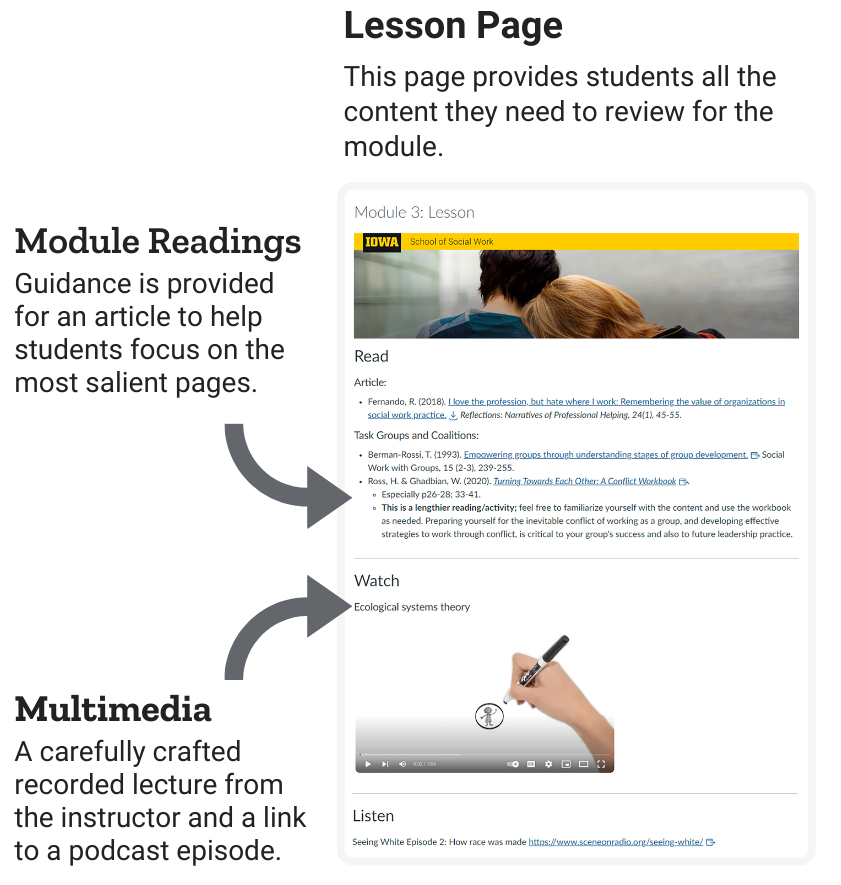
Lesson Page Elements
Read
Provide the full list of weekly readings. Be sure to include a proxy link for journal articles from library databases to ensure students can access from off-campus. Add some text to guide students, including the most important sections as well as guiding questions that students may be asked to answer after later in the module.
Watch
Articulate module objectives that scaffold assessments, learning activities, and content to support student achievement of course learning objectives.
Additional (i.e. Listen)
Curation of audio/video content from around the web is common in online courses. Instructors add value to this existing content by contextualizing it within the learning arc of the course, and by providing guidance on how content relates to their personal and professional lives.
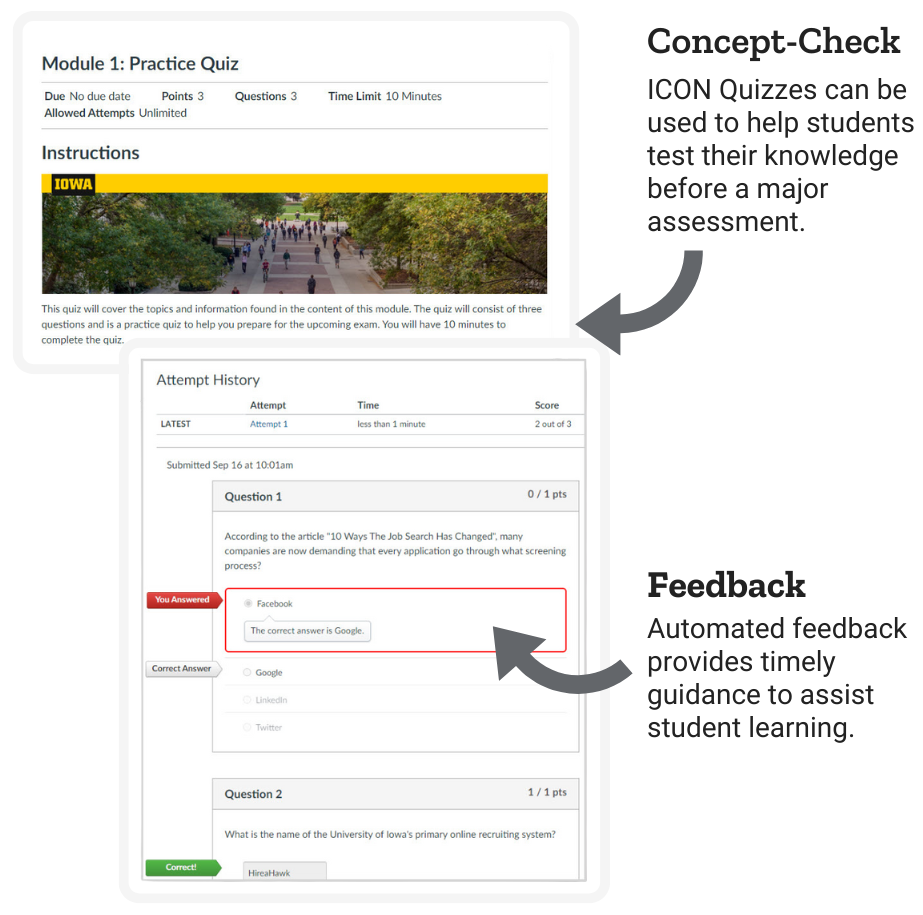
Quiz Elements
Instructions
Ensure students understand the purpose of your quiz (i.e.: check understanding of Unit 1 main concepts) and requirements (i.e.: time limit, number of allowed attempts, automated feedback based on answers, etc.).
Feedback
Insert custom feedback into quizzes that automatically displays to students based on their answers. For example, direct students to review certain passages from course readings and recorded lectures before they proceed. This helps to ensure students understand crucial distinctions in the application of central course concepts in varying contexts.
Research
Focus on the end-goal of a course and how students can apply what they have learned in their future. Then work backwards to support students at each crucial step in their learning (Wiggins & McTighe, 2005).
An integrated assessment strategy helps instructors structure and sequence activities to provide deeper learning for students (Meyer & Nulty 2009).
Aligned objectives, assessments, and learning activities help students see that their learning is connected to how they will be assessed and better prepares them to put their learning into practice (Biggs, 2003).
Related Reading
Related Reading
Absorb-Do-Connect Framework
Absorb activities (i.e. lecture) build foundational knowledge. Do activities turn information into skills through active engagement. Connect activities help learners link new knowledge to prior experience to support long-term retention and transfer. This resource offers activity suggestions, examples, and tools to help you integrate each stage into your teaching practice immediately.
Online Course Model
Developed and shared by IOWA instructors, online course models demonstrate effective instructional practices within an online course. Hear directly from an instructor on how they applied Universal Design for Learning principles to encourage students to take ownership over their learning.